

You’re posting regularly. Your content looks good. You’re showing up consistently. But somehow, you still feel like you’re shouting into the void.
Sound familiar?
Here’s the thing: more content isn’t the answer. While everyone else is sprinting toward burnout, the brands that actually grow are building something different—something repeatable, strategic, and designed to move people in the right direction.
The question isn’t whether you need more content. It’s whether you need a content strategy. And if you’re tired of creating content that gets lost in the noise, the answer is YES.

Random content gets watched. Strategic content gets consumed—in sequence, with intention, and with growing trust.
This is the difference between a viral hit that fades and a business that actually grows. It’s not just about getting views. It’s about earning a second one, a third one, and then a client.
Without strategy, your content exists in isolation. Each post, video, or story stands alone, competing for attention in an oversaturated market. But with strategy, every piece becomes part of a bigger arc, a breadcrumb trail that leads your audience from curiosity to trust to action.
That’s exactly what we help clients build at Videre Creative—content ecosystems where every piece has a purpose, a path, and a place in your system.

Here’s where most brands get it wrong: they confuse consistency with volume, or worse, with willpower.
But real consistency comes from alignment and a repeatable system. It’s not about posting every day—it’s about making sure what you do post is actually moving people in the right direction.
The brands that win understand that strategy creates flow. It connects ideas, formats, and topics in a way that keeps people curious and moving forward. Not just entertained, but invested.
When your content becomes “bingeable”—when each piece naturally leads to the next—you stop chasing attention and start earning it.

Before you can build a content strategy, you need a foundation. That’s where content pillars come in.
Content pillars are the core themes or topics that guide everything you create. They act as overarching categories that ensure your content stays focused, relevant, and aligned with both your brand message and your audience’s interests.
Defining your pillars helps you:
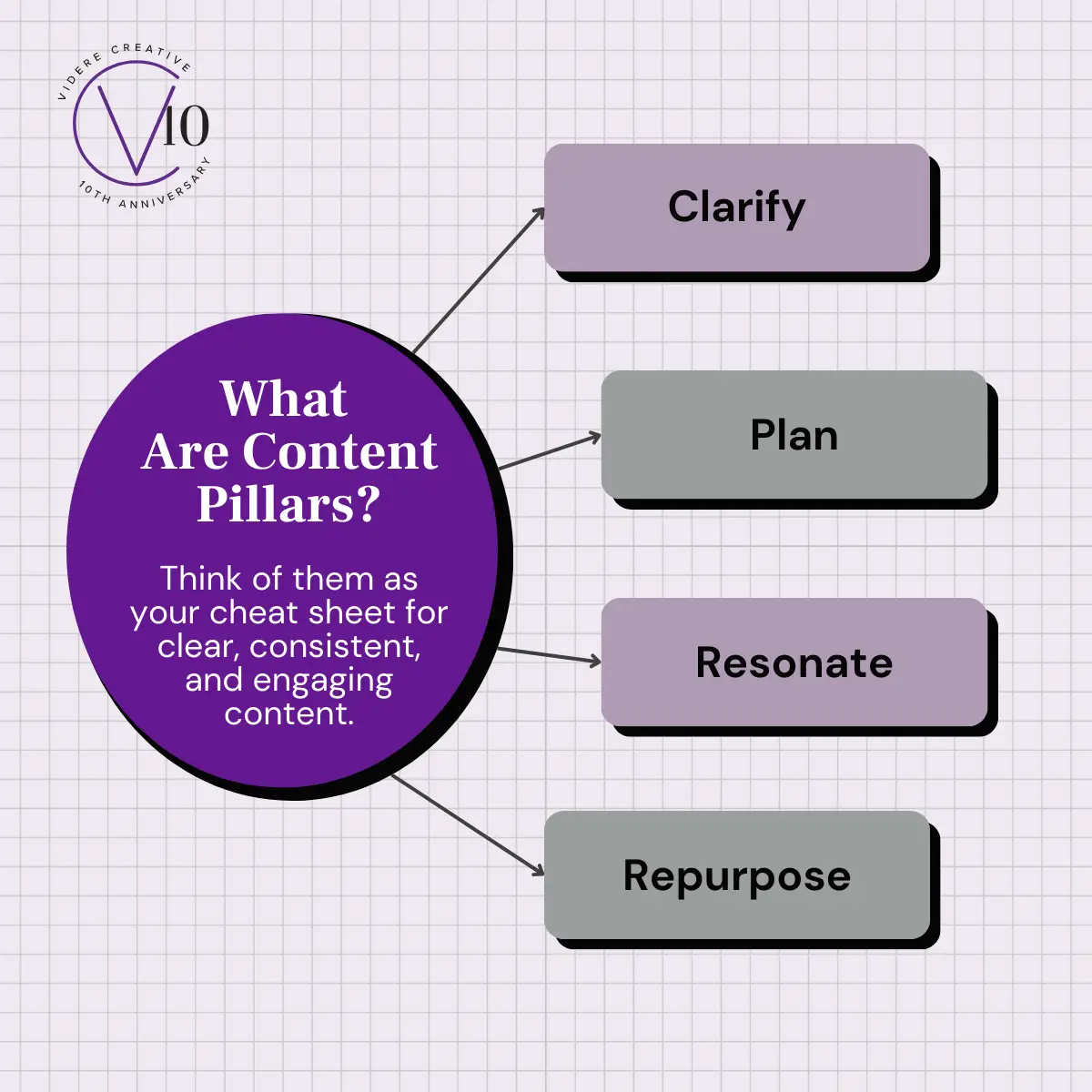
- Clarify your message: You’ll know exactly what you stand for and what value you provide.
- Plan content ahead: Batch creation becomes simple when you know which buckets to fill.
- Boost engagement: Your content will resonate more deeply with your target audience.
- Avoid burnout: You can reuse and adapt ideas within your pillars instead of reinventing the wheel every week.
For example, a healthcare brand’s content pillars might be:
- Educational: Information about the practice or relevant industry statistics.
- Promotional/Awareness: Event highlights, messages from practitioners, and success stories.
- Technical: Demonstrations of services or guidance on the patient process.
- Trust/Credibility: Posts about industry news, transparency, and client testimonials.
These pillars become the framework for everything you create, ensuring variety while maintaining focus.

At Videre, we use a hub and spoke model to maximize the impact of every content piece our clients create.
Here’s how it works: Your “hub” is a substantial piece of content—usually a blog post, webinar, or comprehensive resource. And the “spokes” are all the supporting content pieces that extend from and amplify that central hub.
A Real Example from Our Own Marketing:
THE HUB: A Comprehensive Blog Post
We wrote an in-depth article titled, “5 Common Video Marketing Mistakes (and How to Fix Them).” This single post served as the foundation for everything else.
THE SPOKES: A Multi-Channel Campaign
From that one blog post, we created a series of smaller assets:
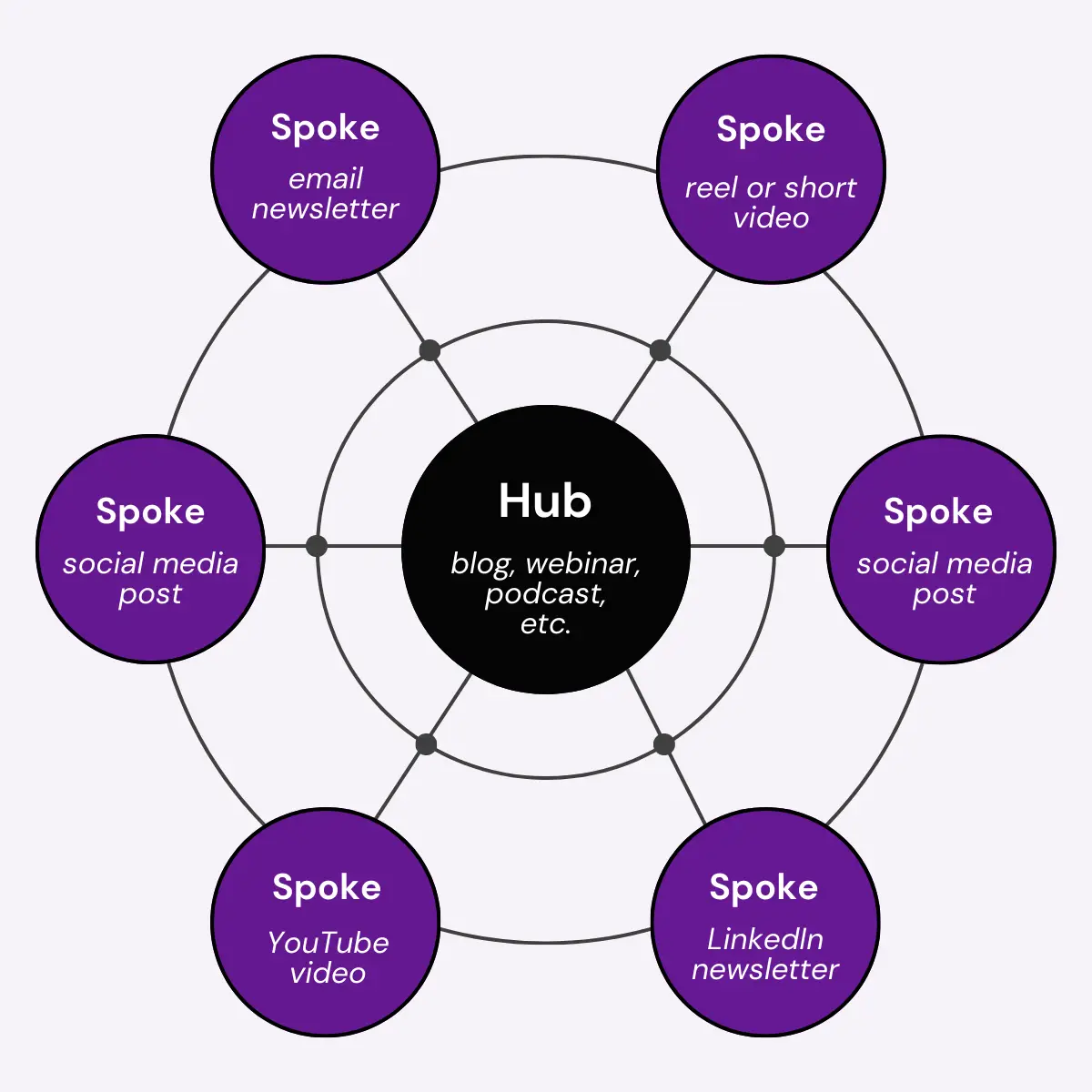
- Five Unique Social Media Posts: Instead of just linking to the blog, we created a dedicated post for each of the five mistakes. One was a carousel breaking down the first mistake, another was a single graphic for the second, a short video for the third, and so on. Each post offered standalone value while encouraging followers to read the full blog for more.
- An Email Newsletter: We featured the topic in our newsletter, leading with that theme and linking back to the main blog post for our email subscribers.
- A LinkedIn Newsletter: We adapted the content again for our LinkedIn audience, creating a native article that leveraged the same core ideas.
As you can see, from one substantial piece of content, we created weeks of social posts, email content, and video assets—all connected by a central theme that reinforced our expertise and provided consistent value to our audience.
This approach doesn’t just save time (though it does!). It creates a cohesive narrative that helps your audience connect the dots between your various content pieces. Instead of isolated posts, you’re building a comprehensive picture of your brand’s value and expertise.

Everyone talks about retention, but most miss the point.
It’s not just about keeping people watching longer—it’s about keeping the right people engaged all the way through. High retention isn’t the goal. High retention with strategic intent is.
Because a video that keeps the wrong people watching wastes time AND attracts more of the wrong people. But content that holds your ideal clients, buyers, or believers? That builds momentum.
This is why strategic content planning matters. When you know who you’re trying to reach and what action you want them to take, every piece of content becomes a filter, attracting the right people while naturally screening out those who aren’t a fit.
(Not sure where your current strategy stands? Take our quick quiz to assess the strength of your video marketing efforts and discover what steps could take your content to the next level.)

Strategic content doesn’t just perform better; it compounds.
When your content works together as a system, each piece amplifies the others. A blog post supports your social content. Your social content drives traffic to your website. Your email newsletter reinforces the messages from your videos. Everything connects, creating multiple touchpoints that build trust over time.
Compare this to random content creation, where each piece exists in isolation, competing for attention rather than working together toward a common goal.
The brands that understand this don’t just save time and avoid burnout, they create content that actually drives business results. They build audiences that convert. They establish expertise that leads to referrals. They create systems that work even when they’re not actively posting.

Ready to move beyond random content creation? Start here:
- Define Your Content Pillars: Identify 3-4 core themes that align with your expertise and your audience’s needs. These become the foundation for everything you create.
- Plan Your Hubs: Choose substantial pieces of content that can anchor your strategy—comprehensive blog posts, webinars, case studies, or resource guides.
- Map Your Spokes: For each hub, identify 5-10 supporting content pieces that can extend and amplify your central message across different formats and platforms.
- Create Your Content Calendar: Plan how you’ll roll out your hub and spoke content over time, ensuring consistent value delivery without overwhelming your audience.
- Measure What Matters: Track not just views or engagement, but progression. Are people consuming multiple pieces of your content? Are they taking desired actions? Are the right people finding and connecting with your brand?
Start with one hub and its supporting spokes before expanding. The goal isn’t to overhaul everything overnight, but to prove the system works with one solid example.
Once you see how connected content performs differently from isolated posts, you’ll never go back to random content creation.

You don’t need to post more. You don’t need to be on every platform. You don’t need to chase every trend.
You need a strategy that makes your content work harder—for less effort.
When every piece has a purpose, a path, and a place in your system, that’s when content starts to compound. That’s when you stop shouting into the void and start building real relationships with the people who matter most to your business.
Ready to build a content strategy that actually drives results? Let’s talk about how to turn your next piece of content into a system that keeps working long after you hit publish.